Along the Baltic Sea

Patrick Irwin reading The Water Dancer by Ta-Nehisi Coates, with cover art by Calida Rawles
Many people have the name Patrick Irwin. There’s “Cocaine Cowboy” Irwin, from north west Ireland, known on the Emerald Isle as a rural drug boss. There’s American film composer, Irwin, who created the score for Showtime’s Dexter. There are Patrick Irwins working as physicists, politicians, athletes, and astrobiologists. Then there’s the Irwin who showed up at my doorstep. A fiery red-bearded man reminiscent of Free Folk, those wildings who worship the old gods of the forest in George R.R. Martin’s high fantasy novels.
This Patrick Irwin, a sound artist traveling from Nashville, arrived without wearing gloves during the coldest winter the Nordic region had felt in a long, long time. It’s with this Irwin that I would share a cabin for two weeks as joint artists-in-residence of KORDON, a program that invites creatives to commune with nature on Hiiumaa Island in Estonia.
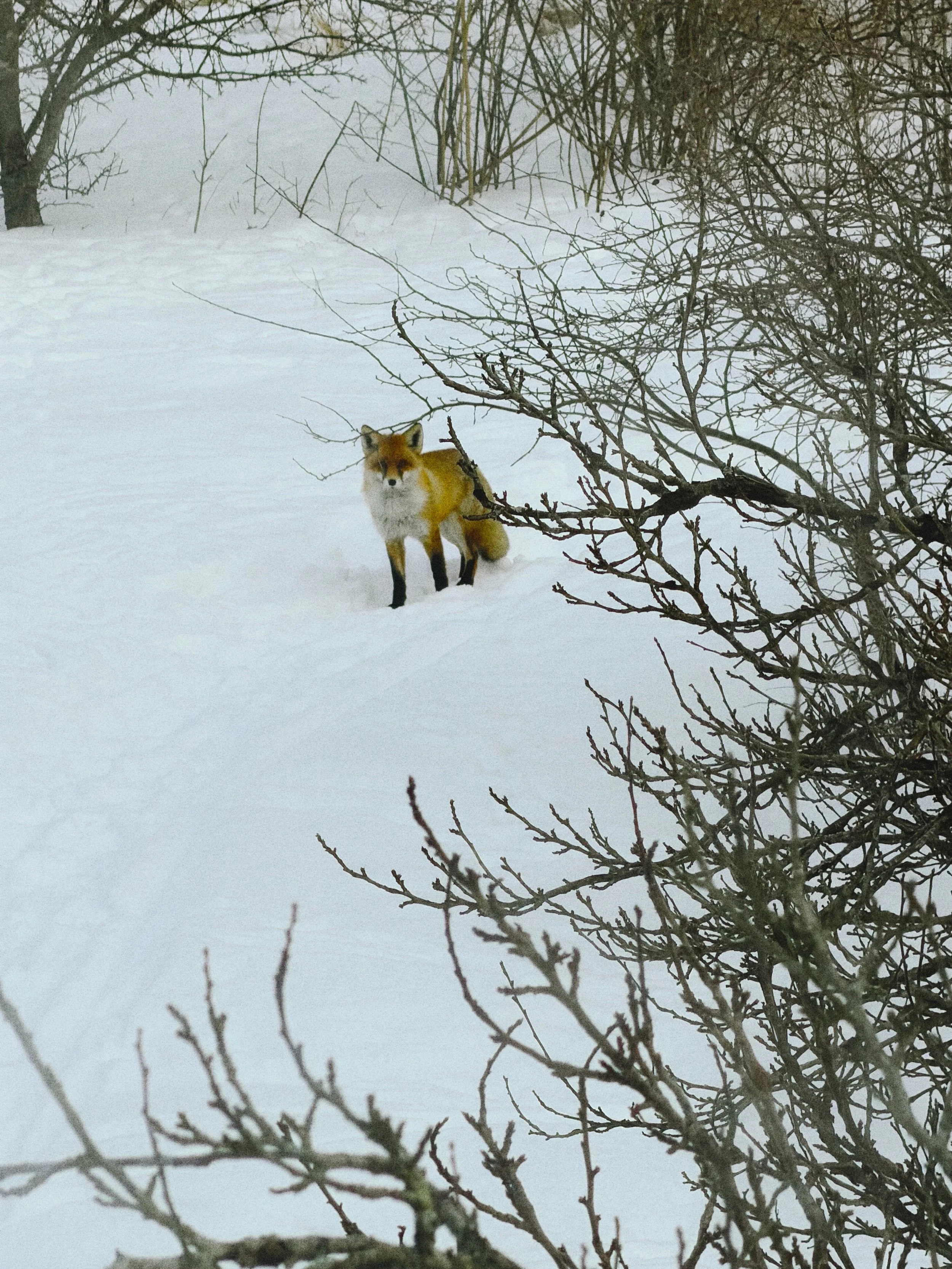
Our many conversations punctuated the silences. The quiet I had previously hunted, like the island’s fox whom I watched carrying its fowl prey from my window, often crept up eerily. Living smack dab in the middle of a metropolis has made me a stranger to more muted terrains. So although I dreamt of having this time, mostly alone, on a landscape carpeted by fir and facing the Baltic Sea, I quickly caught cabin fever. It took less than two days for the psychosomatic delirium to hit me. And I was glad there was someone close enough to cool the frenzy.
We spoke sporadically, but never briefly. Confessing our disparate takes on Irish Catholicism, human sexualities, what makes a really good country song, strategies for gambling in Backgammon, just how many letters from convicts I’ve inherited, and the current trouble in Minneapolis, of which Patrick is a native son.
He arrived in Estonia to field record the breath of the sea. Taking a mental health break from the encroaching artificial intelligence which has invaded the music industry, through which he earns a good portion of his bread and butter, composing in Tennessee.
I came to the island to embroider. Stitching ancestral history onto blue velvet fabric that mirrored the arctic sky on its sunniest mornings. This was my way of recognizing Black History Month, in semi-solitude, sewing my lineage onto ceremonial cloth. Furthering the volume I initiated during the Pandemic, when I first began to “drag” my family.
When we got around to the topic of books, he told me he had brought three. The Rest is Noise, a sonic, nonfiction title by The New Yorker’s music critic, Alex Ross. Killers of the Flower Moon, another nonfiction, penned by another The New Yorker journalist David Grann. And The Water Dancer, a novel by Ta-Nehisi Coates. As soon as Patrick mentioned Ta-Nehisi’s novel, I saw, in my mind, a photograph. But I would wait to ask.
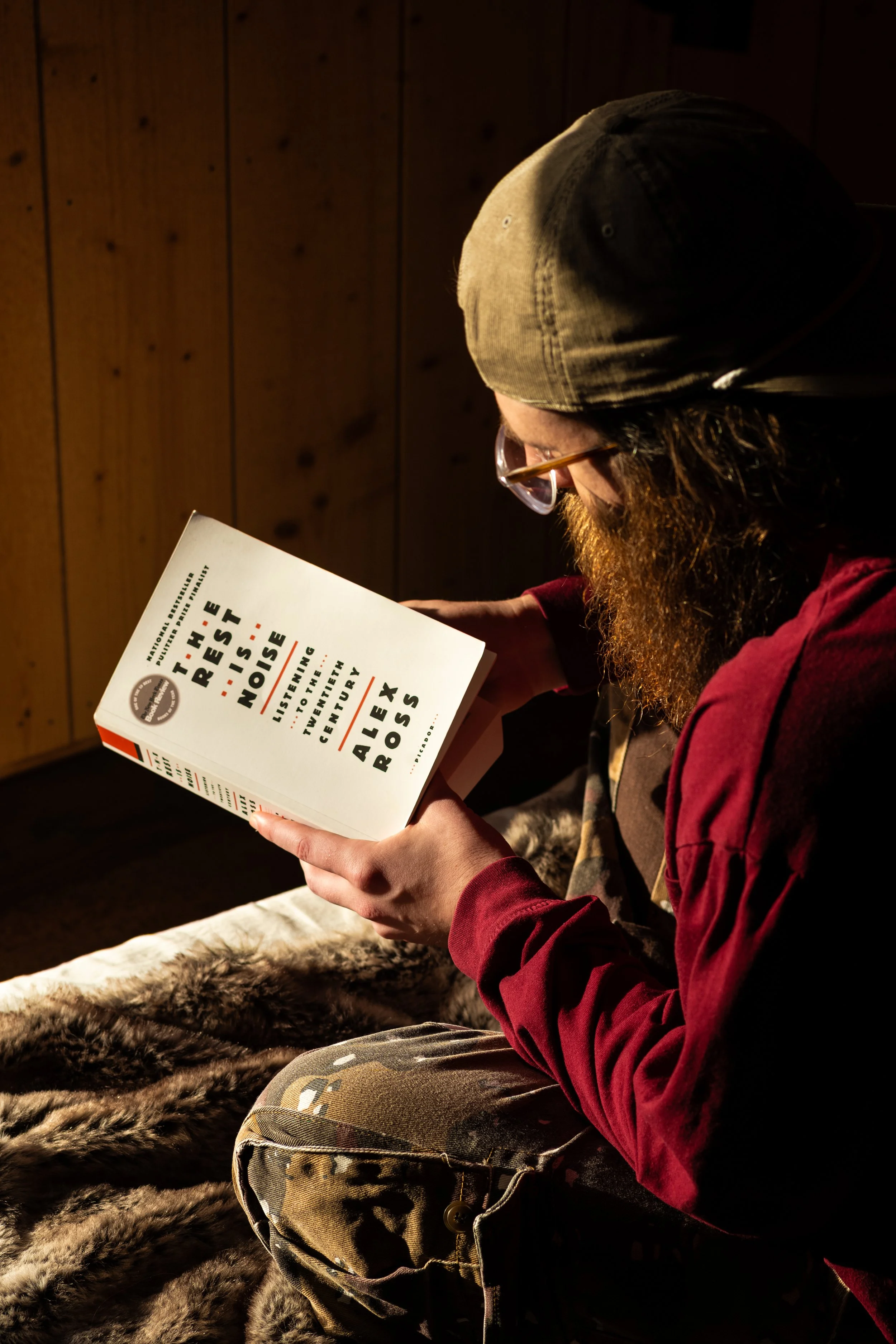
I consider myself a maker of images, not a taker. A co-conspirator with the characters who agree to perform for my camera. I don’t want to shoot or capture them, not because I’m non-violent. I’d certainly fuck somebody up if I had to. However, as a descendant of enslaved kinfolk who were/are captured, took, shot, surveilled, and blown up, I try, in my craft, to engage with non-aggressive language and attempt decolonial approaches to photography.
So, I waited to sense a willingness. I waited to sense a worthiness. I don’t ask people to sit with, or for me, willy nilly. When I finally did pose the question, we were both ready. Our time spent listening, joking, working, resting, and silently reading is documented through these few whispered portraits.